
 English
  Español
  Русский


| Comparison Dimension | Conventional Laser (Continuous/Full Coverage) | Fractional Laser |
|---|---|---|
| Mode of Action | Energy uniformly covers the entire treatment area – like "carpet bombing" | Energy is divided into numerous micro-beams, forming microscopic treatment zones (MTZs) in an array pattern, while surrounding tissue remains intact |
| Injury Characteristics | Large-area, continuous injury | Spot-like, spaced injury (covers only 3-40% of skin) |
| Healing Source | Relies on slow migration from healthy tissue at the margins | Each micro-injury zone is surrounded by healthy tissue, allowing rapid repair from all sides |
| Recovery Time | Ablative lasers require 1-2 weeks or longer | Non-ablative fractional: just hours to 2-3 days |
| Side Effect Risk | Higher (hyperpigmentation, scarring, infection) | Significantly lower (preserves abundant healthy tissue as a "repair reservoir") |
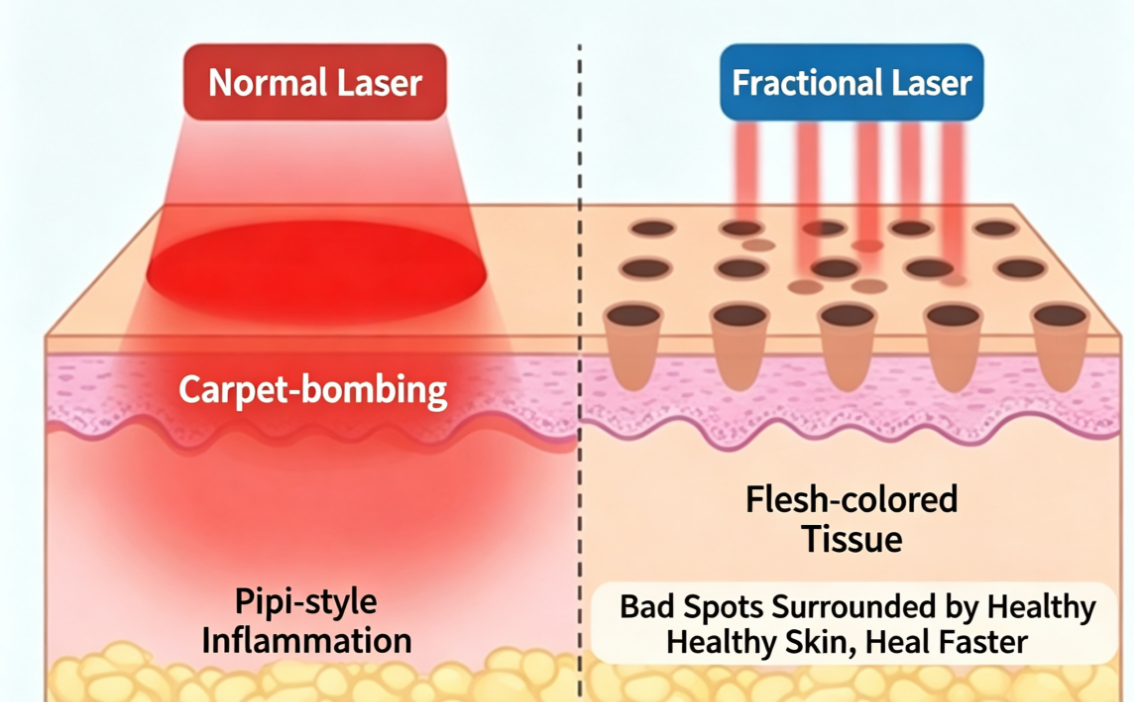
In 2004, Drs. Manstein and Anderson from the Wellman Center for Photomedicine at Harvard University first introduced the concept of "fractional photothermolysis," laying the theoretical foundation for fractional lasers.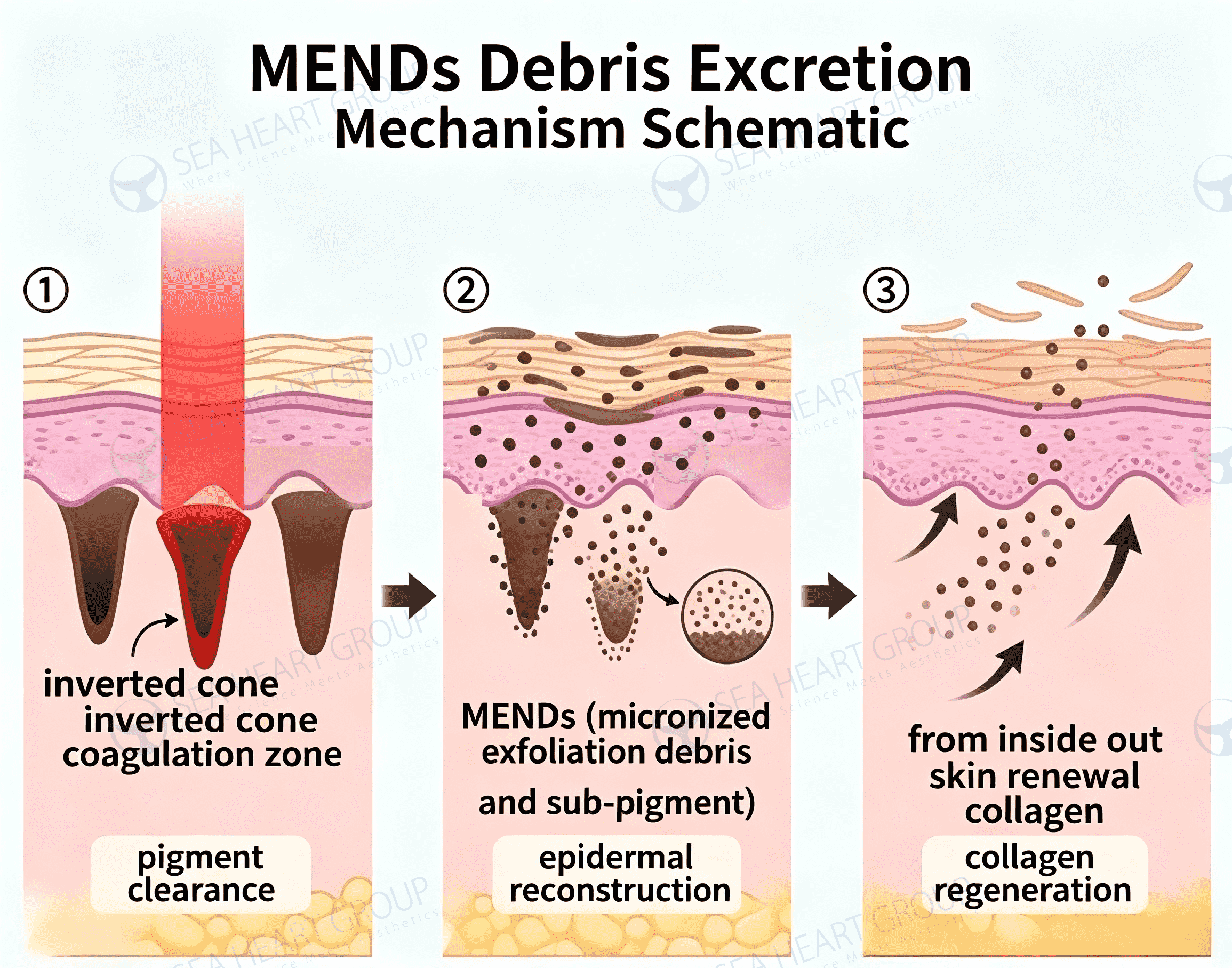
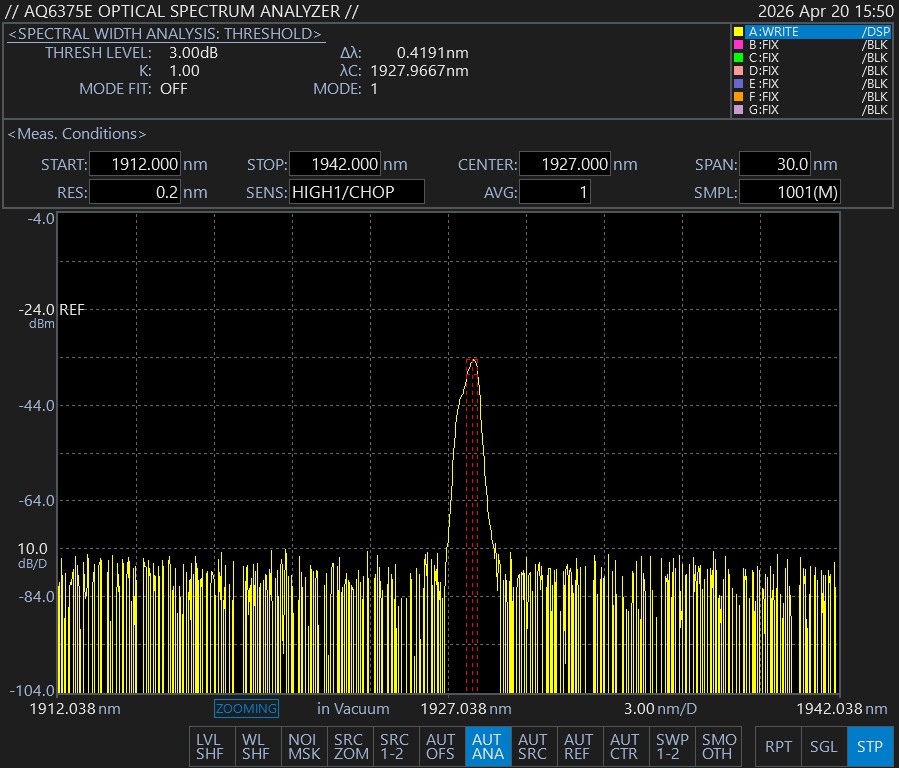
In the 1927nm non-ablative fractional thulium laser, energy is efficiently absorbed by water, creating inverted cone-shaped zones of coagulated tissue in the epidermis and superficial dermis. Within one day post-procedure, these zones form "microscopic epidermal necrotic debris" (MENDs) – tiny particles containing melanin and thermally denatured keratin. MENDs gradually migrate to the stratum corneum and are shed within 7 days, while the underlying healthy epidermis rapidly regenerates. This process achieves the triple synchronization of "pigment removal + epidermal reconstruction + collagen neogenesis."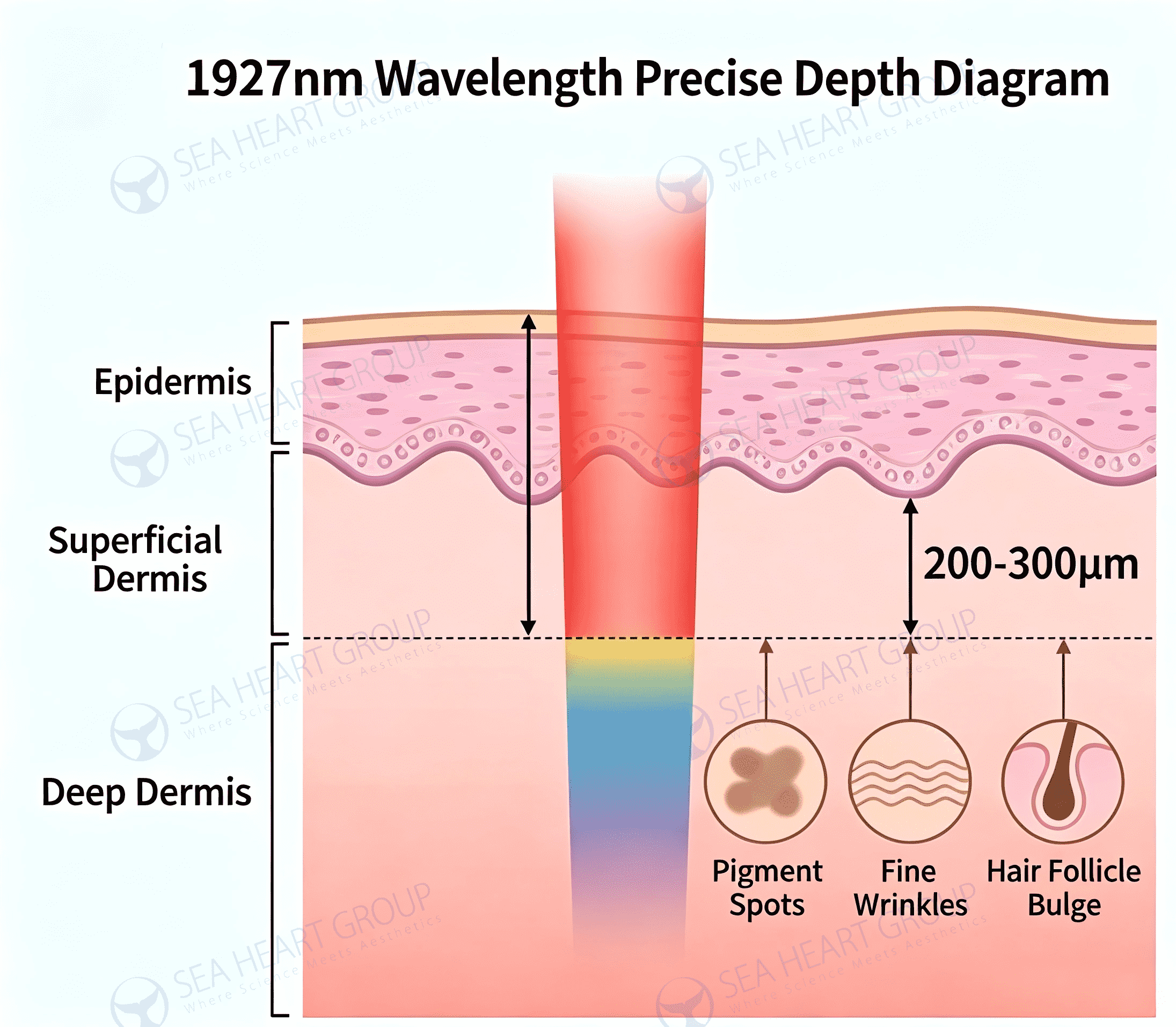
The water absorption coefficient of the 1927nm thulium laser is approximately 10 times that of the 1550nm erbium glass laser, but much lower than that of ablative CO₂ lasers. This means:
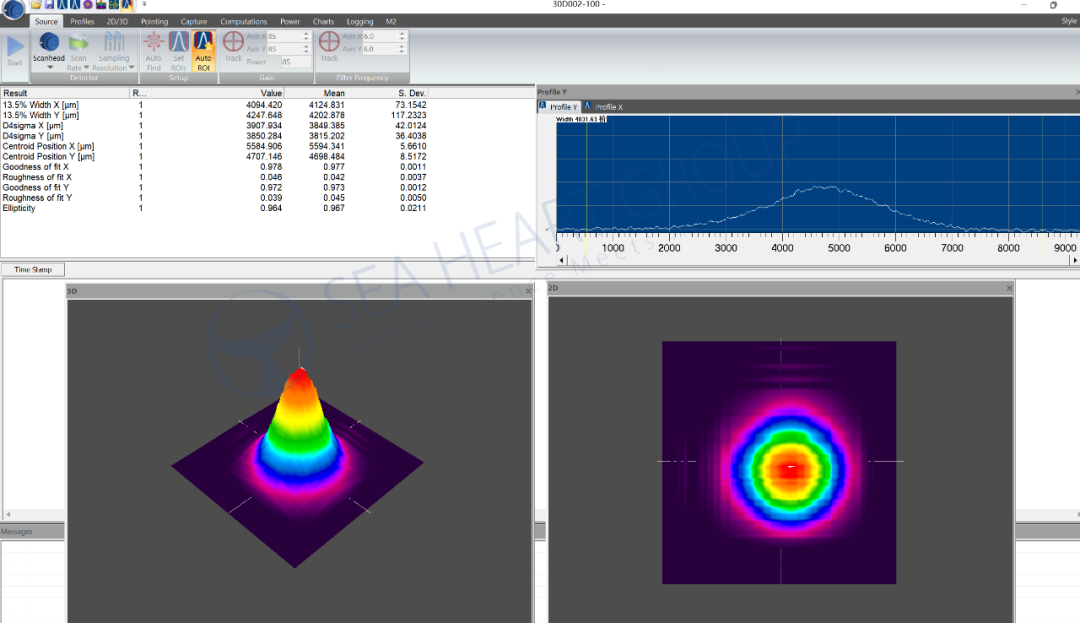
Key parameters of fractional lasers include spot size, coverage density, and pulse energy. Physicians can flexibly combine them based on the patient's primary concern (mainly pigment vs. mainly texture vs. hair loss):
This modular design allows the 1927nm laser to serve both cosmetic and therapeutic tasks.
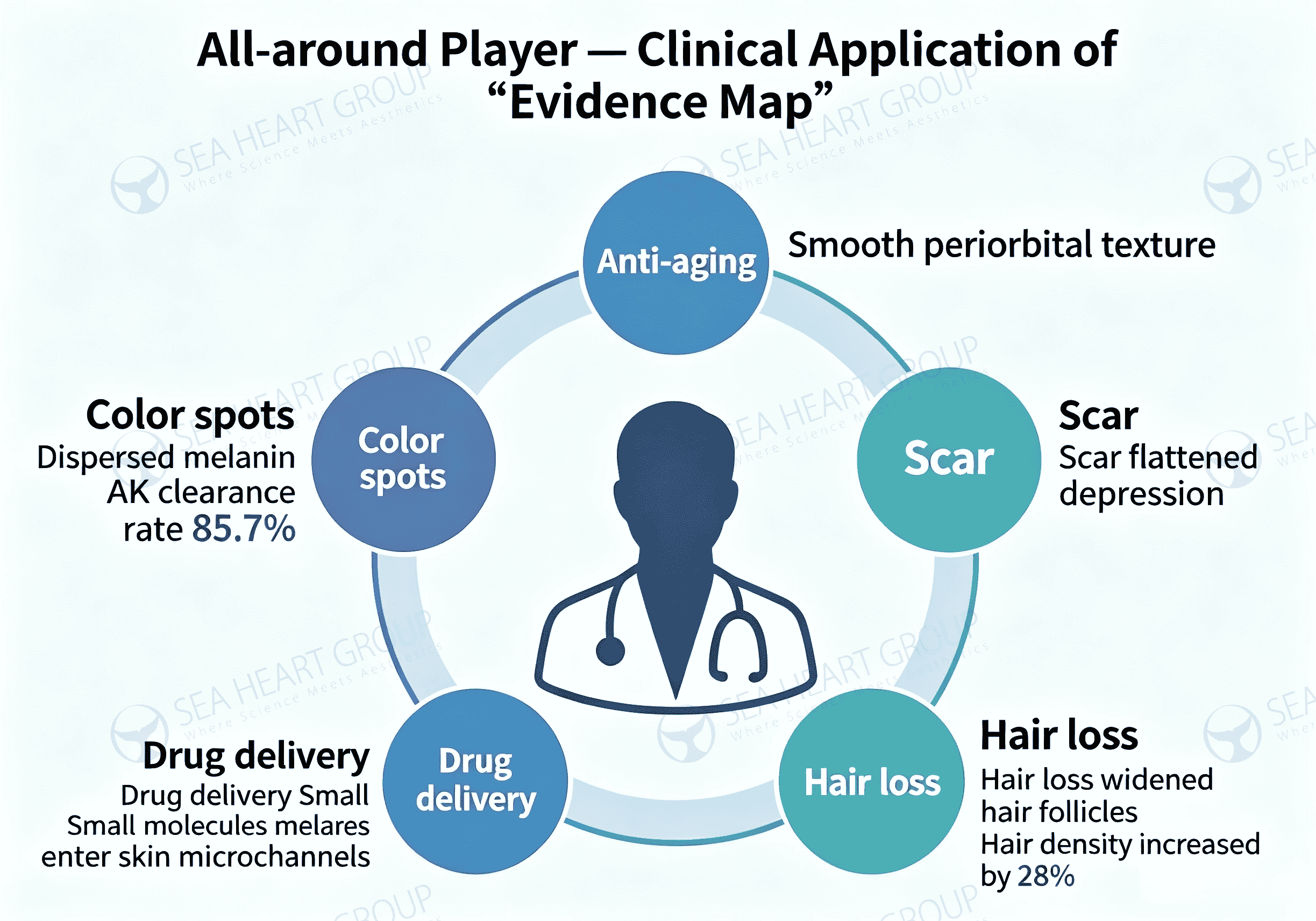
Peer-reviewed clinical studies or systematic reviews
| Application Area | Specific Indications | Key Findings & Data |
|---|---|---|
| Pigmentary disorders | Melasma, solar lentigo, post-inflammatory hyperpigmentation | MASI score improvement 28–45%; combination with tranexamic acid maintains results for 3 months; safe in darker skin types (III–VI) |
| Actinic keratosis | Facial AK (precancerous lesions) | After 4 treatments at 6 months, AK lesion count reduced by 86.6%; histological clearance rate 85.7% |
| Skin rejuvenation | Facial and periorbital fine lines, pores, dull complexion | Significant improvement in skin brightness (L* value) and pigment score after 3 treatments; better wrinkle improvement with 4-week interval; adverse effects resolved within 7 days |
| Atrophic scars | Acne scars, surgical scars | Significant improvement in scar smoothness and texture; comparable efficacy to 2940nm Er:YAG laser but with shorter recovery time |
| Androgenetic alopecia | Male/female pattern hair loss | After 12 weekly treatments, hair density and thickness significantly increased (P<0.001), effects maintained for 3 months; improvement seen after just 2 treatments |
| Laser-assisted drug delivery | Combination with growth factors, tranexamic acid, salicylic acid, etc. | Laser+growth factor side: 28% increase in hair count from baseline; combination with salicylic acid significantly increased dermal thickness |
The 1927nm thulium laser effectively improves atrophic acne scars and surgical scars. A prospective split-face study demonstrated efficacy comparable to the 2940nm Er:YAG laser, but with less pain and a shorter recovery period.
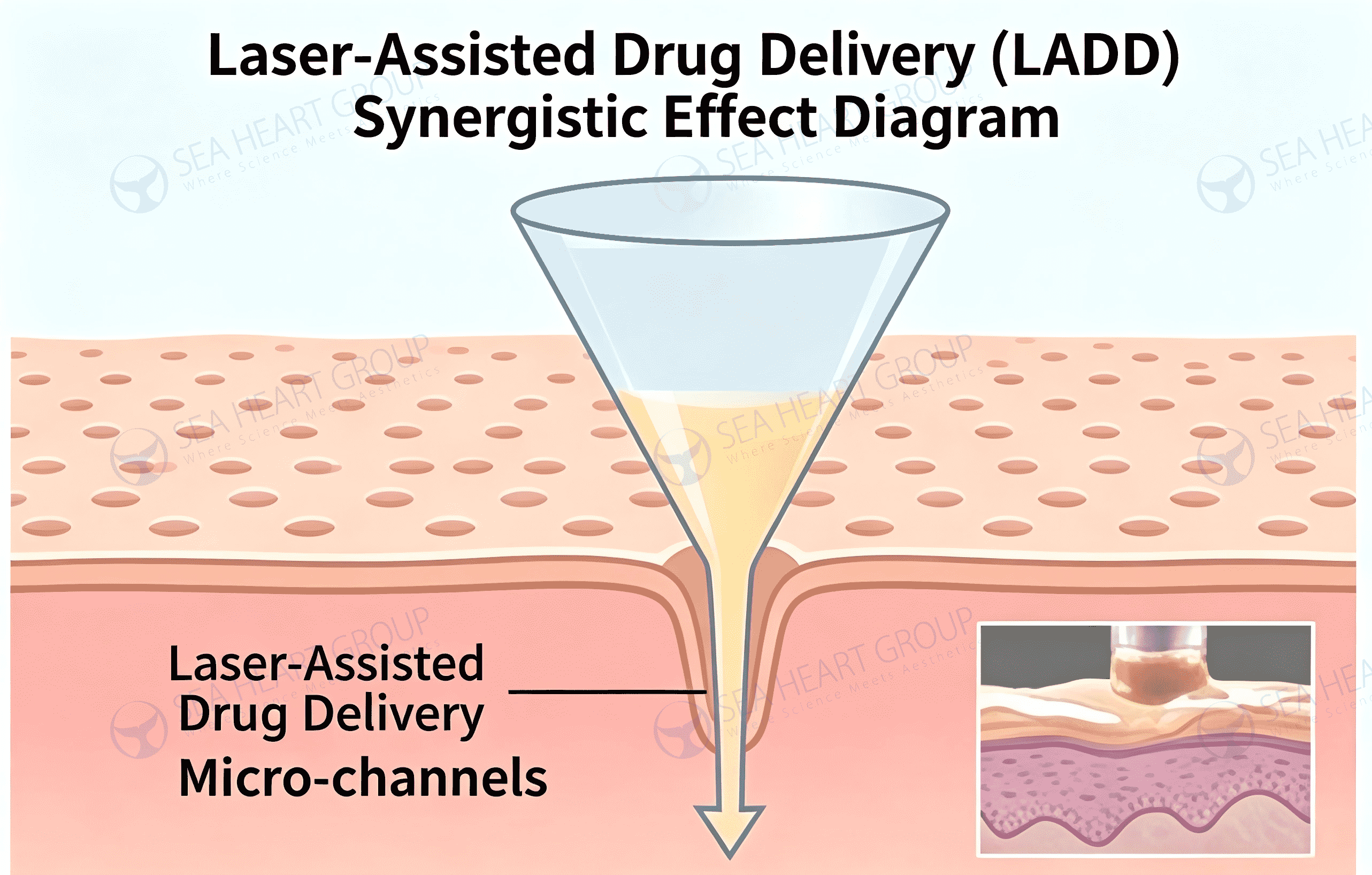
The 1927nm thulium laser can open numerous microchannels (diameter ~6–130 μm) without disrupting the stratum corneum, greatly enhancing absorption of topical agents.
Across various studies totaling over 500 patients, the most common adverse effects of the 1927nm thulium laser were mild, transient erythema and edema (incidence ~30–50%), typically resolving within 24–72 hours. Hyperpigmentation occurred in less than 5% of cases, and no permanent scarring or visual impairment was reported. Multiple systematic reviews confirm its safety in darker skin types.
As a "microchannel platform," the 1927nm thulium laser can be combined with:
With the miniaturization of fiber lasers, low-energy 1927nm thulium laser home-use devices are already in development. In the future, combined with AI skin analysis, a closed loop of "home detection + precision treatment" could become a reality.
| Feature | 1927nm Fractional Thulium | 1550nm Non-Ablative Fractional | Fractional CO2 |
|---|---|---|---|
| Primary tissue focus | Epidermis and superficial dermis | More dermal-focused non-ablative remodeling | Ablative epidermal resurfacing with variable dermal remodeling |
| Typical clinical positioning | Pigmentation, superficial photoaging, uneven tone and specific laser-assisted drug delivery protocols | Acne scars, surgical scars, texture concerns, fine lines and dermal remodeling | More intensive resurfacing, deeper wrinkles and significant scar remodeling |
| Relative treatment intensity | Low to moderate, depending on parameters | Moderate, depending on parameters | Moderate to high, depending on parameters |
| Downtime profile | Often shorter, but depends on treatment settings and patient factors | Often short to moderate, depending on protocol | Often longer because treatment is ablative |
| Best portfolio role | Pigment-focused and superficial-resurfacing complement | Texture- and scar-remodeling complement | Higher-intensity resurfacing option |
| Main buying question | Do you need pigment-focused and superficial fractional capability? | Do you need more dermal remodeling for scars and texture? | Do you need stronger resurfacing when patients can accept longer recovery? |
Important: Wavelength alone does not determine treatment depth, safety, recovery time or clinical outcomes. Actual performance depends on device design, energy settings, density, treatment technique, skin type, indication and post-treatment care. Clinics should follow local regulations, approved indications and qualified clinical guidance.
A 1927nm thulium laser may be a suitable addition for dermatology practices, aesthetic clinics and medical-spa operators that want to expand pigment-focused resurfacing and superficial photoaging treatment options. It can also be relevant for clinics seeking a fractional platform for clinician-directed laser-assisted topical delivery protocols.
A 1927nm fractional thulium laser is commonly positioned for pigment-focused treatments, superficial photoaging concerns and specific clinician-directed laser-assisted drug-delivery protocols. Specific indications, parameters and expected outcomes depend on the device, patient assessment and local regulatory requirements.
No. A 1927nm thulium laser is generally positioned as a non-ablative fractional technology, while fractional CO2 is an ablative resurfacing technology. They differ in tissue interaction, treatment intensity, downtime profile and typical clinical use cases.
1927nm is generally associated with epidermal and superficial-dermal treatment goals, including pigmentation and superficial photoaging. 1550nm is commonly used for more dermal-focused remodeling, such as texture concerns and specific scar treatments. A dual-wavelength platform may provide greater treatment flexibility.
Fractional treatment may create temporary microchannels that can support clinician-directed topical delivery protocols. However, the topical product, concentration, sterility, patient selection and regulatory status must be evaluated by qualified professionals.
It may suit clinics that treat pigmentation and photoaging frequently, seek non-ablative fractional-resurfacing options, or want to add a complementary wavelength to an existing laser portfolio. Buyers should also assess training, service, technical specifications and local compliance requirements.
Suitability depends on individual skin type, pigmentary risk, diagnosis, treatment settings and clinician experience. A qualified provider should assess each patient and select conservative, appropriate parameters.
Compare wavelength verification, parameter range, handpieces, dual-wavelength options, certifications, approved indications, clinical training, warranty, maintenance and after-sales support.
The 1927nm non-ablative fractional thulium laser, with its precise water absorption characteristics, fractional micro‑damage design, and platform capability for laser‑assisted drug delivery, has evolved from a simple "epidermal resurfacing tool" into a versatile powerhouse covering pigmentation, photoaging, scars, hair loss, and more. Its greatest appeal lies in awakening the skin's own regenerative potential at minimal cost.
*Note: This article is based on published academic literature and aims to convey cutting-edge information on laser aesthetic medicine. For specific treatment plans, please consult a qualified physician.*

UltraPixel Dual 1550/1927 Thulium Laser Features
 Dubai Derma 2026
 BeautyEurasia 2026 in Turkey
 Best Body Slimming Machines for Clinics in 2026
 Top 10 Aesthetic Equipment Suppliers in China (2026 Edition)

